
SEO & Traffic Launch
A New Website: A 90-Day Plan From Launch to First Leads
What to do in the first 90 days after launch: technical setup and indexing, content and local pages, GA4 and Search Console, goals and call tracking. A week-by-week calendar and control metrics.

Short answer: launching a website isn’t the finish line — it’s the start of measurement. The first 30 days decide whether the site gets indexed and which pages start sending traffic; days 31–60 add content and local pages; days 61–90 are conversion and internal linking. If goal analytics isn’t set up in these 90 days, you’ll never know which page sold and you’ll promote blind.
Days 0–7: the technical base nothing else works without
- One URL version. Only
https, only one domain variant (with or withoutwww), all others 301-redirected. Make sure the redirect doesn’t return 200 on both versions. - Indexing.
robots.txtnot blocking,sitemap.xmlreturns 200 and lists only canonical URLs, in Search Console submit the map and request indexing of key pages. - Speed. Homepage LCP < 2.5s on mobile, INP < 200 ms, CLS < 0.1. Images — WebP/AVIF with explicit width/height, fonts — preload, scripts — deferred.
- Meta and data. Unique titles (up to 60 chars, matching page intent) and descriptions, Open Graph,
og:image, Organization + LocalBusiness/WebSite markup, Product for stores. - Conversion mechanics. “Call” buttons, WhatsApp/Telegram, a form with validation and notification to email and CRM, a tappable address and map.
- Stability. A year of SSL headroom, automatic backups, uptime and 404 monitoring, a 404 page with search and links to services.
Days 8–30: structure for demand and first rankings
- Group keywords by intent: commercial (“order”, “price”, “buy”, “done-for-you”), informational (“how to choose”, “comparison”, “vs”), local (“city”, “near me”). 3–8 pages per cluster.
- One page per intent. Homepage for the brand and general service, a landing for a specific query. A single page optimized for two different intents ranks for neither.
- Local pages. For geo services: a city page with unique copy, address, reviews, a map, LocalBusiness markup and a link to the Google Business Profile. Not “a template with the city swapped in”.
- A blog as a tool, not a news feed. 2–4 articles in month one — for informational queries, linking to landing pages. How to write copy that leads to a enquiry — the 90-day SEO guide.
- Google Business Profile. Filled, verified, with photos, services, prices and a site link; the first 5–10 reviews strongly influence local “near me” queries.
Days 15–45: analytics that answer “what sold”
Without this you can’t tell “the site works” from “we got lucky with word of mouth”. The minimum stack:
| What we set up | Why | How to tell it’s working |
|---|---|---|
| GA4 + events (form, tap-to-call, messenger click, 75% scroll) | see the path to a lead | all 4 events visible in reports |
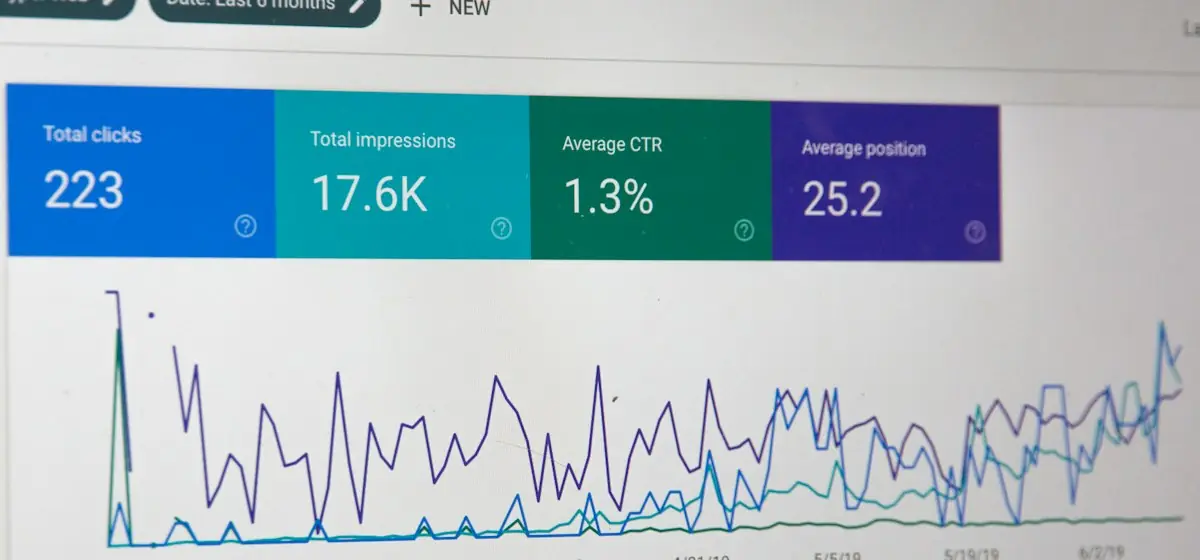
| Search Console linked to GA4 | queries, pages, clicks, positions | export without 2× discrepancies |
| UTM tagging on every post and ad link | source → conversion | no channel is “(not set)” |
| Goals in the CRM (lead source + stage) | count money, not leads | cost per lead visible by channel |
| Call tracking / dynamic numbers (from 30 leads/mo) | calls are leads too | % “unknown” sources drops |
| A weekly dashboard | to manage, not just watch | the dashboard has an owner and a review day |
Days 30–60: content, internal links, trust
- Strengthen donor pages. In Search Console find pages with impressions but no clicks: add a price/FAQ/case block, rewrite the title to match intent.
- Contextual internal links: 2–3 links from every article to services and cases with descriptive anchors. This passes equity and walks the reader to a lead.
- Cases with numbers. 3–5 “challenge → solution → result” pages are the highest-converting B2B content: they’re read by people comparing vendors. Structure examples — in the portfolio.
- Trust signals (E-E-A-T): author/team pages, real photos, company details, reviews with names, updated dates, answers to common objections.
- The small things that matter: certifications, partner statuses, client logos, press mentions — with captions, not “a wall of logos”.
Days 60–90: conversion and protecting the traffic you’ve earned
- Review heat maps over 300+ sessions: where people don’t scroll to the form, where they click instead of the button.
- Cut the form to 1–2 fields, add messengers and a ≤ 5-minute response SLA.
- Speed up the most-visited pages: images, scripts, caching — see website speed.
- Make sure redesigns and edits don’t break URLs: any structure change goes through the SEO migration checklist.
- Assemble a “90-day” report: core rankings, clicks, leads by channel, cost per lead, next-quarter plan.
Control metrics by week
| Period | What we watch | Normal benchmark |
|---|---|---|
| Week 1 | indexing, 404s, CWV, lead test | key pages indexed, LCP < 2.5s |
| Week 2–4 | impressions in Search Console | growing impressions on core, first clicks |
| Month 2 | positions 11–30, leads from search | 3–10 queries in the top 10, first 2–5 leads |
| Month 3 | landing conversion, cost per lead | 0.8–1.5% for services, a clear lead price |
Bottom line
A new website lives by the same rules as a business: first the measurement infrastructure, then demand, then conversion. Ninety days of discipline — and you have not “a site” but a channel with a clear cost per lead.
Get a launch plan for your site → — we’ll review the current state, gather keywords, set up analytics and lock a ranking baseline. Related: SEO for a new site and redesign without losing traffic.
from $1,400
Need the same solution for your business?
We rebuild sites that look dated but hold rankings: structure, URLs and links stay intact while design, speed and conversion change. Before any start — a fixed baseline of positions and traffic.
- Current-site audit and SEO baseline
- Preserved URLs, redirects and structure
- New design-system UI
Get a free website audit in 48 hours
Speed, SEO, conversion — a 12-page report with a prioritized fix plan. No obligation, no spam: we show what to improve even if you never hire us.
- Core Web Vitals & speed
- SEO structure & content
- Conversion paths & UX