

Renovation Estimate: Where the First Number Comes From
Turnkey renovation: what builds the first estimate figure, how to show a price per square metre, and which enquiry can be priced without extra calls or site visits.


Short answer: a client does not wait for your estimate if the first number has to be extracted from them by questions. They want a guide before the call: a price per square metre by work type and finish level, a list of what it covers, and a note on what is priced separately. Then two mechanisms do the work: an enquiry that already carries the area, the job type and photos of the flat, and an estimate written as a document with quantities, units and stages. For the company that means fewer trips to measure nothing and fewer conversations about “what does a square metre cost”. A construction company site with a calculator and a costing form starts at from $1,325 (₴55,000).
What matters in 30 seconds
The first number decides whether the client trusts you with an enquiry or goes on asking.
A per-square-metre guide commits nothing: it shows a range and what sits inside it.
An estimate without quantities and units reads as “a number out of a hat”.
An enquiry with area, job type and photos shortens the path to a quote by one call.
Site visits are needed where structure and worn services are in question; the rest prices from photos and area.
Staged payment and a written warranty weigh as much as price in the choice.
A calculator on the site removes routine questions and leaves the complex jobs to the manager.
Why the client does not wait for your estimate
The behaviour of someone hunting a renovation contractor looks the same every time:
- Evening search: “flat renovation turnkey price”, “how much does renovation cost per m²”, a map with three companies nearby.
- Four sites compared in ten minutes: where there are no figures, nobody stays.
- Enquiries sent to two or three companies at once, with a same-day answer expected.
- A refusal for whoever replies the next day, or opens with “when can we come and measure”.
The reason is simple: the client does not know what it should cost and fears being pulled into a negotiation that is awkward to leave. “Price after inspection” reads exactly as an invitation into that negotiation.
| What the client sees on the site | What they think | What they do |
|---|---|---|
| “Price is individual, leave a request” | “they won’t say, probably expensive” | writes to three others |
| A per-m² guide and what it covers | “I understand the order of magnitude” | sends area and photos |
| Project examples with stages and dates | “they have done what I need” | asks about a start date |
| A warranty list and staged payment | “there is a way to close a dispute if something goes wrong” | agrees to a site visit |
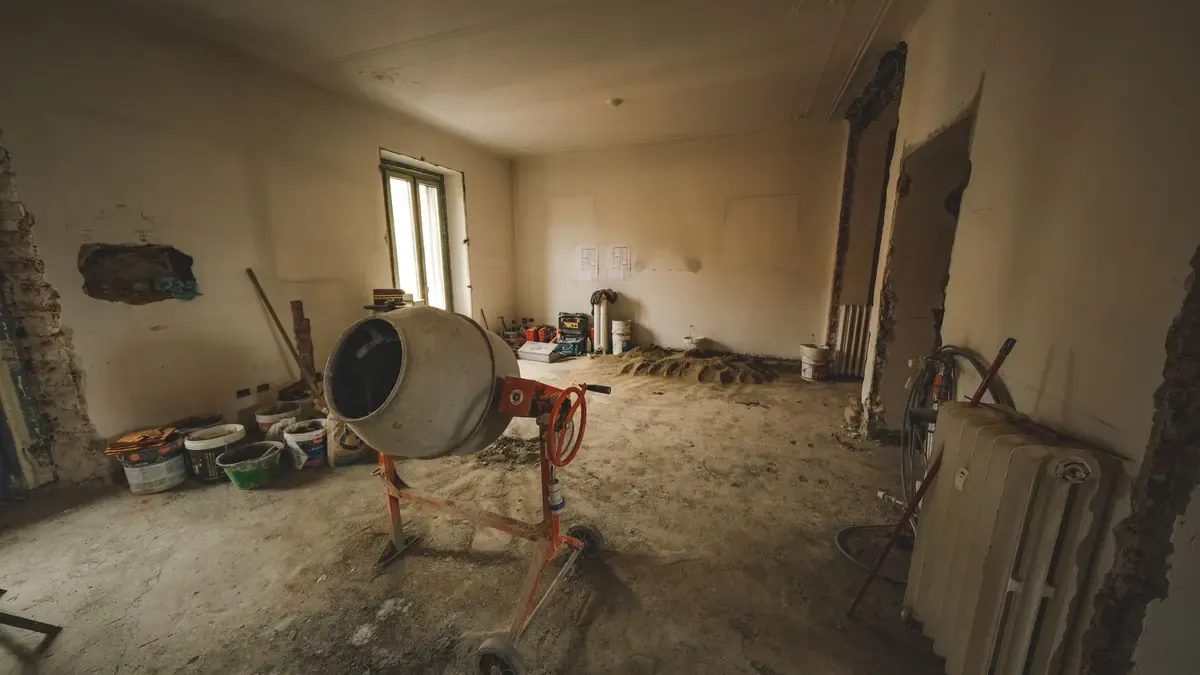
What builds the first number
Five components a client wants as separate lines:
| Component | What sits inside it | What can change the sum |
|---|---|---|
| Works | strip-out, plastering, electrics, plumbing, final finish | condition of the property, number of wet points, older stock |
| Materials | first fix, second fix, or the client’s own | second-fix prices, delivery, leftovers |
| Design and measuring | layout, furniture plan, working drawings | rework after the start |
| Schedule and programme | sequence of stages, who comes next | parallel trades, supply delays |
| Warranty and clean-up | guarantee period, waste removal, final clean | waste volume, access to the property |
When a company quotes one “turnkey” sum, the client cannot see what they are paying for and haggles with the whole number. Show five lines and they haggle with specifics: “we can do this ourselves”, “we’ll buy the second-fix materials”.
A price per square metre: how to publish it without binding yourself
The honest formula: work type × finish level × property condition.
| Level | What it usually covers | How to present it |
|---|---|---|
| Cosmetic | removing tired finishes, levelling, painting, surface replacement | “from … per m², without rewiring” |
| Standard turnkey | plastering, electrics to plan, plumbing, final surfaces | “from … per m², first-fix materials included” |
| Extended | design, complex electrics, underfloor heating, built-in joinery | “from … per m², design priced separately” |
| Heavily worn full rework | strip-out to slabs, services, floor levelling in several layers | “the figure forms after inspection, the guide is higher” |
Three rules so the guide works for enquiries instead of against you:
- Publish “from”, not “up to”. The client compares the lower bound, and your job is to explain what sits inside it.
- Describe what is excluded. Second-fix materials, worn services, permits, furniture. The list removes half the questions.
- Date the figure. “Guide valid to the end of the quarter” is more honest than a number that has lived three years.
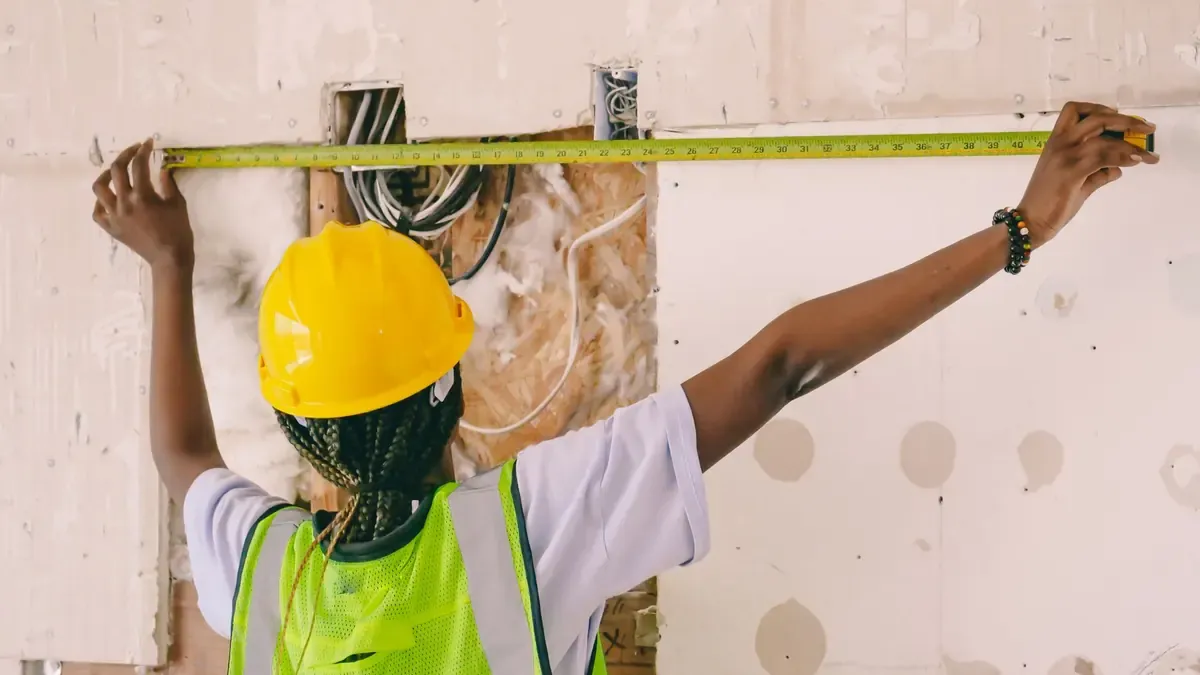
The enquiry you can start pricing from
A “name plus phone” form costs the company one extra call per lead. Five fields are needed:
| Field | Why | What it gives the estimate |
|---|---|---|
| Property area, m² | the base multiplier | a sum without a conversation |
| Job type | cosmetic, turnkey, bathroom only, kitchen only | the right row from the table |
| Property condition | new build, second-hand, after a previous renovation | strip-out and levelling risk |
| Photos of the property | 2–6 shots of the rooms | most site visits become unnecessary |
| Address and a convenient time | logistics and a call at the right moment | fewer missed calls in peak hours |
Two extra fields that help in season: the wanted start date and an indicative budget. The first lets you say honestly that you are booked until such-and-such a date; the second removes negotiations about jobs you do not want.
Site visits: when you cannot price from photos
The honest boundary: some properties do not price from pictures. Travel when:
- worn services, uneven slabs or old timber floors are suspected;
- a re-plan moves wet zones;
- the property is large and logistically complex (access, lift, building work hours).
In other cases area, photos and a work list are enough: a preliminary quote goes out before the visit, and measuring becomes confirmation rather than discovery. The difference is counted in trips: with an enquiry that carries area and photos, “come and look, then price from zero” visits drop noticeably.

The estimate as a document: the layout clients expect
| Estimate line | What must be there | What scares clients off |
|---|---|---|
| Work list | name, unit, quantity, rate, total | “miscellaneous works” as one line |
| Materials | category, quantity, whether delivery is inside | an unnamed “materials — 20,000 ₴” |
| Stages and dates | sequence, duration, who follows | one “completion” date five months out |
| Exclusions | surface finishes, furniture, permits, site supervision | no such section at all |
| Change terms | how extra work is priced, who approves | “we’ll sort it on site” |
| Warranty | period and what it covers | a verbal guarantee |
A useful detail: the client compares estimates from two or three companies, and the one with legible lines wins, not the one with the lower total. A low total without quantities reads as a risk that it will grow mid-job.
Staged payment and warranty
Two clauses that often decide between two companies at the same price:
- Staged payment. The client pays for a closed part of the work rather than a promise. For them it is protection against “money taken, work stalled”.
- A warranty in the contract. The period and the list of what gets fixed free of charge. In construction this is not formalism: defects show up in autumn and winter.
If a company demands 100% prepayment with no stage schedule, the client keeps looking, even at a higher price. That is not distrust; it is a risk they do not know how to size.
Case: a construction company in Lviv
In the construction company case clients picked contractors from social-media photos and a friend’s tip, and the site was a page with a phone number. Completed projects were nowhere visible in full, guarantees and the contract had to be explained in a meeting, and enquiries arrived without area or job type — every one needed a clarifying call.
We built a corporate site:
- a page per project with stages, dates and before-and-after photos;
- services with a price-per-m² guide and the scope of works;
- guarantees, contract terms and staged payment as their own section, before the first meeting;
- an enquiry form that asks for area, job type and photos up front;
- an indicative calculator: work type, area, condition and finish level;
- leads into Telegram and a CRM carrying area, address and photos.
Six pages, 4–6 weeks. The case carries a forecast labelled a guide rather than a promise: a share of enquiries arrive already carrying area and photos, unnecessary site visits drop, and “what does a metre cost” questions fall visibly thanks to the calculator.
What to do in the first month
Price three typical jobs: a one-bedroom new build, a two-bedroom second-hand flat, a bathroom alone. Fix the per-m² figures.
Write out what the guide covers and what is billed separately.
Put those lists on the site: service, finish levels, date of validity.
Rebuild the enquiry form: area, job type, condition, photos, address, convenient time.
Make an estimate template with quantities and units that assembles in 20 minutes.
Add a page on guarantees, the contract and a worked payment schedule.
Where this saves nothing
If you do one job type and always price on site, a calculator is surplus: an honest per-m² range is enough.
A guide without a review date turns into a falsehood quickly, and a stale figure costs more than no figure.
An estimate with twenty lines of trivia reads as fog: bundle small items into grouped lines.
A ten-field form deters people: five needed fields beat ten possible ones.
A warranty without a period and a list is not an argument: the client cannot tell what you guarantee.
| Service | From | Timeline |
|---|---|---|
| Corporate site · Lite (up to 7 pages, custom layout) | from $1,325 (₴55,000) | 3–4 weeks |
| Corporate site · Standard (5–10 pages, custom design, 2 languages) | from $2,145 (₴89,000) | 4–6 weeks |
| Landing · Lite (a layout built for the offer) | from $699 (₴29,000) | 2–3 weeks |
| Speed & technical fixes | from $241 (₴10,000) | 1–2 weeks |
How we do this at DEXA
- Corporate site · Lite (up to 7 pages, custom layout) — from $1,325 (₴55,000) · 3–4 weeks (About this service)
A construction company site: projects with stages and before-and-after photos, services with a price-per-m² guide, an enquiry form carrying area, job type and photos, a calculator, and a separate section on guarantees and staged payment. You update prices and the work list yourself in the admin panel. The estimate and the deadline go into the contract.
Questions construction company owners ask
Will a calculator undercut us once competitors see the numbers?
Competitors already know the market per square metre. The calculator works for enquiries: it answers “so roughly how much” and leaves the manager the complex jobs that need real costing.
What if area and photos do not give a precise figure?
Show a range and list what can move it: worn services, uneven floors, moving wet zones. A client accepts a range far more readily than “we’ll price after inspecting”.
Does every project need its own page?
Yes, once you have more than five and you show stages. A project page is proof of work rather than a gallery: what was done, over what period, with what scope.
How often should the per-m² guide be updated?
Quarterly, or when materials and rates shift. The site should carry a date: “valid as of this month”. That is one edit in the admin panel, not a developer ticket.
Enquiries arrive without an area. Is that the form’s fault?
Usually yes. If “area, m²” is optional, people skip it. Make area and job type required and photos encouraged: one number in a field saves a call.
What do we do with the old site that only shows a phone number?
First decide what to keep: if the URLs and structure are sound, this is targeted work from $241 (₴10,000) or speed fixes from $241 (₴10,000). If the site is one page with no services, building a new one at from $1,325 (₴55,000) is simpler.
What the construction company’s whole site should hold — projects, services, prices per square metre and a costing request — is on the construction company page. On not losing rankings when a site is rebuilt, see the redesign without losing SEO guide.

corporate · Lite from $1,325 (₴55,000) · corporate · Standard from $2,145 (₴89,000) · corporate · Premium from $3,494 (₴145,000)
Need the same solution for your business?
A company website with bespoke design and motion: services, cases, team, languages and an admin panel. We build the structure around what your clients search for on Google.
- From 5 pages: services, cases, team, prices
- Lite — a custom layout without complex motion
- Standard — bespoke design, GSAP, two languages, an admin panel
Get a free website audit in 48 hours
Speed, SEO, conversion — a 12-page report with a prioritized fix plan. No obligation, no spam: we show what to improve even if you never hire us.

