

Banquet Requests at a Restaurant: Where They Disappear
Banquet requests arrive on Instagram and disappear in a notebook: what a separate event page, an enquiry form and a room calendar actually change.

Short answer: a banquet enquiry is not a table booking, so a shared schedule for them never works. The date belongs to nobody until a deposit is in, and that is where guests invent a second plan. What works: a page that answers the five usual questions before the call, an enquiry form with the right fields, a schedule showing the dates a zone is already held, and an event calendar. DEXA guides: from $699 (₴29,000) for a page that turns traffic into enquiries, from $1,325 (₴55,000) for a full site with menus and photo sections, from $72 (₴3,000)/mo for support.
What matters in 30 seconds
A banquet enquiry is a request for a date and a hall: capacity, minimum spend, deposit, final menu date.
DMs and calls with no fixed format lose the date, the guest count and the phone number.
The most expensive moment in a season is two confirmed groups in one hall on the same evening.
A “date held” is not a booking: without a deposit the date belongs to nobody, only the terms are written out.
A menu that lives only on paper forces the kitchen to re-explain it on every call.
Enquiries that bypass the site arrive at the reception phone, and there is nothing to analyse at the end of the season.
A page that answers the usual questions does not sell: it shortens the conversation from twenty minutes to five.
How a banquet enquiry differs from a table booking
The same reception desk handles both, and that is where the losses start.
A table booking takes an hour and a place: today at eight, four people. A banquet enquiry takes a date, a room, a guest count, money per person and a calendar of decisions: when to confirm the final count, when the menu is fixed, when the deposit arrives. Putting both into one notebook means treating them with the same tools.
| Question | A table booking | A banquet enquiry |
|---|---|---|
| What is reserved | an hour and a table | a whole evening for a zone |
| How many | four, and they usually all come | thirty-five, with five late and two who cancel |
| What is agreed on the call | a time | capacity, minimum spend, deposit, menu date, music, service hours |
| What you hold before paying | nothing | the date, and the hall turns down the next group |
| How long the deal takes | minutes | from two weeks to two months |
| Where the request arrives | the phone, the website, walk-ins | DMs, calls, the hall manager’s personal number |
A banquet is a project, not a booking: an enquiry that turns into a contract passes through five stages, and a request that dies takes a whole season’s statistics with it. So counting the two together is how you stop seeing the problem entirely.
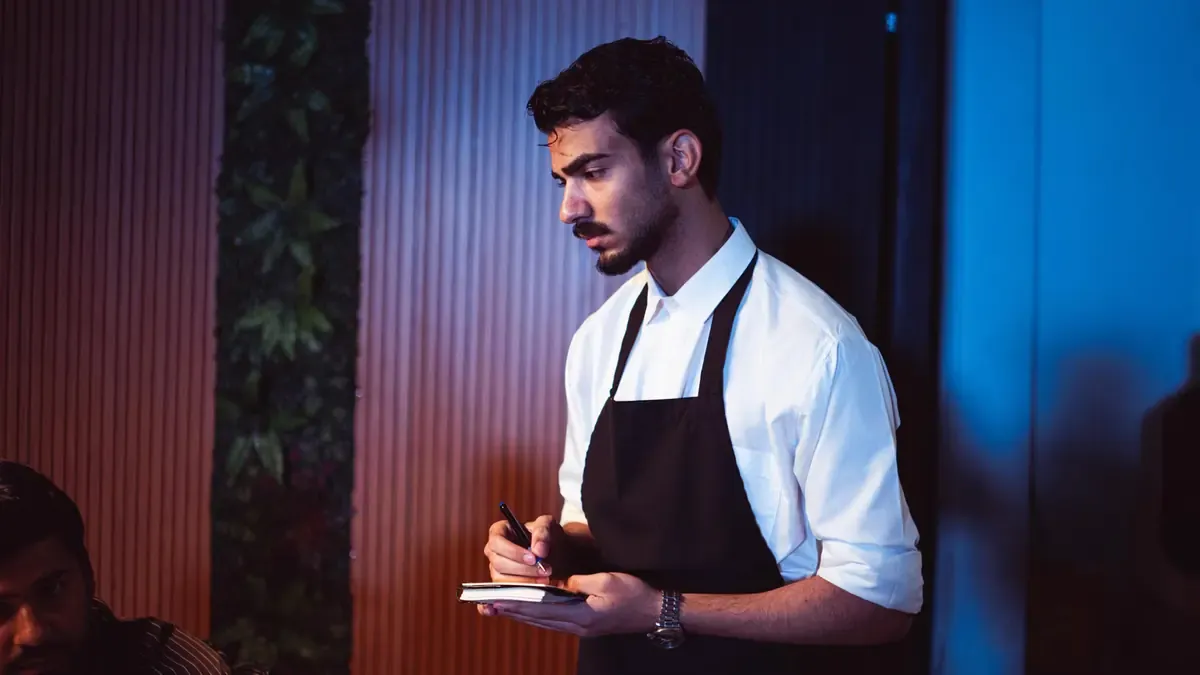
Where enquiries disappear: five places
The losses are invisible because the work still gets done: guests call, the hall gets booked. What you do not see is that a few more calls arrived than became contracts.
| Where it disappears | How you notice | What fixes it |
|---|---|---|
| Instagram DMs at night | messages from midnight unanswered until morning | a bot or an auto-reply with a form link |
| The reception phone during service | the host is serving a hall, nobody picks up | a separate banquet line, or a form instead of a call |
| A hall manager’s personal number | enquiries arrive in their private chat, the season ends without statistics | one entry point for all enquiries |
| A website form with no fields | the guest writes “let’s talk”, nothing to quote from | date, headcount, per-person minimum, phone number |
| The gap between two conversations | the client answers and nobody remembers what was discussed | an enquiry log with the stage and the date |
The first three are entry points that no process watches. The fourth is the form itself: a free-text field with no required fields means the kitchen has to re-ask everything on the phone. The fifth is a CRM, not a website.
A sixth place exists, and it has nothing to do with technology: the guest asks a question the hall cannot answer. “Can we bring our own alcohol?” If the reply takes three calls to a manager, part of those enquiries never come back. An honest answer written on the page is cheaper than a phone tree.
What a separate banquet page does
A page on the restaurant’s site is not advertising. It is a way to shorten the same phone call. The host burns twenty minutes on questions the guest could read before dialling:
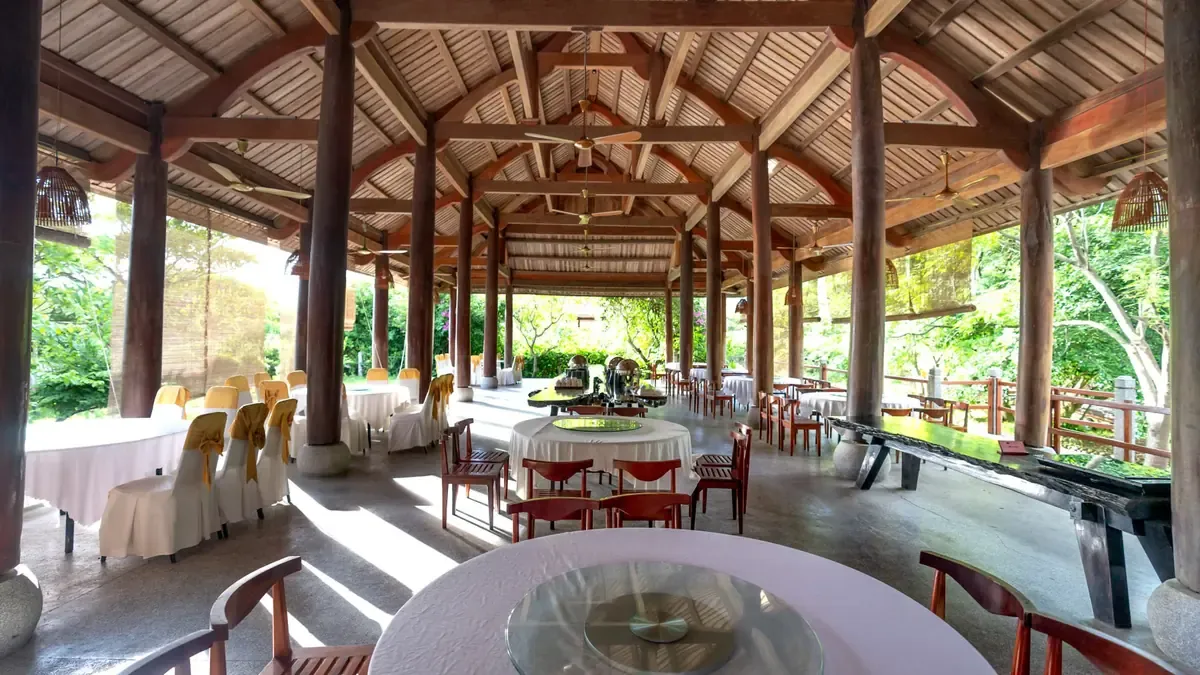
- Capacity and format. Which zones seat how many, what they look like in photos, which are closed for an event and which stay partly working.
- Minimum spend per person. The number that decides whether you need each other at all, in the first paragraph rather than the third phone call.
- Deposit and terms. The amount, the date, what happens if the guest count falls.
- Menu. Set and banquet options, where vegetarian and children’s choices live, the date by which the final menu is fixed.
- The calendar. Dates a zone is already held, so the guest sees a free evening, not a black rectangle in a date picker.
A page like this does not sell: it stops the sale from happening in the dark. In the Lviv restaurant case the menu lived on paper, a phone and Instagram, and the kitchen spent shifts on one repeated question: “what do you have for a banquet and what does it cost”. We wrote the full menu out with per-person banquet rates, dish photos and an online version of the paper card. A separate page for bankets with an enquiry form came next on the list.
The enquiry form: five fields that remove five calls
A form with twenty fields answers nothing and gets abandoned. The useful set is short, and every field replaces a question on the phone.
| Field | Why it must be there |
|---|---|
| Date, or “flexible within a month” | whether the evening is free is the first question, and a form with no date answers nobody |
| Guest count | the difference between twenty and forty is a different zone, a different kitchen, a different minimum |
| Per-person minimum the guest is planning for | filters out enquiries that cannot be served, and tells the manager the real budget |
| Format: banquet, wedding, aperitif, corporate evening | determines music, service hours and the layout |
| Phone number with a messenger note | so the reply goes where the guest actually reads messages |
And one technical point that decides whether the form gets used at all: the enquiry must arrive where the hall already works, in the same inbox as the schedule, not in a mail the manager checks twice a week. If a bot sends a “we received it, we will call today” reply, that alone removes the “nobody answers” complaint.
Booking count is not the only number a form gives you. Every enquiry that goes nowhere leaves a reason written by the guest themselves: the minimum was too high, the date was taken, they wanted to bring their own alcohol. A hundred enquiries with reasons is the cheapest menu and pricing research a restaurant can order.
How to price a banquet: minimum, deposit, final number
Counting starts from the per-person minimum, not from the date.
| Line | How to agree it | What it protects |
|---|---|---|
| Minimum spend per person | a floor for food and drink, written on the page | the hall is not given to twenty people on an empty evening |
| Total minimum | minimum × headcount, agreed on the call | the kitchen knows the volume before buying produce |
| Deposit | a fixed sum by a fixed date, in writing | the date stops being held by nobody |
| Final headcount | a deadline a week or two before | how much you can cut, and until when |
| Corkage, if any | by bottle or a flat amount | three calls to a manager stop being necessary |
A guest “thinking about the date” costs the hall real money: all other enquiries for that evening get refused in the meantime. That is why the deposit is not a formality and not distrust: it is a term that lets you hold a date at all. If the guest cancels after the deadline in the agreement, the deposit stays with the restaurant: written out, not agreed “somehow” in DMs.
What to do in the first month
Gather the five usual questions into one answer: capacity, minimum, deposit, menu, service hours.
Photograph every zone twice, at full layout and at minimum. No angles nobody would ever set up.
Make a banquet page with an enquiry form and five fields.
Put the calendar of held dates next to the form, and update it yourself to start with.
Point Instagram at that page, and let the bot answer during closed hours.
At the end of the month, read all the enquiries with their reasons.
Double booking and holding a date: how the zone calendar works
The most expensive moment in a season is two confirmed groups in one hall on the same evening. It happens for one reason: the schedule lives in people’s heads.
- Each zone has its own calendar. An evening in the main hall does not close the terrace or the private room. One shared notebook does the opposite: it blocks free space that was available.
- A date held is not a booking. Before the deposit the date goes on the calendar as a hold with a date, and after the deadline it releases itself.
- Whoever answers, writes. The moment the host and the manager both keep the calendar, you get double bookings. One entry point, one schedule.
- Held dates are visible on the site. The guest sees which evenings are still open before ringing, and the manager stops saying “that evening is taken” all day.
- A zone’s capacity is not a single number. Standing format and seated format are different figures, and it is worth writing both out: otherwise forty guests turn up at a hall set for twenty-five.
This works even without a site: a manager keeps a calendar in a free tool, and the Instagram reply carries a link. The problem starts with scale: when the season has dozens of enquiries, a manual calendar turns into two calendars.
The banquet menu: where it lives and who edits it
A paper menu that the manager reprints before every season creates three problems at once: the kitchen re-explains it on the phone, guests ask for dishes no longer cooked, and the price arrives too late for anybody to plan around it.
A working menu on the site:
- is divided into sections. Set banquets, individual choice, children’s, vegetarian;
- carries per-person prices, not a total the guest has to divide themselves;
- has real dish photos. Pictures from a stock bank make the first complaint before the food is served;
- is edited by one person. The chef changes a price, the host changes a phone number, and nobody knows which version is current;
- has a line about the final choice date. That is where disputes about “we wanted something else” end.
The same page answers an awkward question nobody wants to discuss on the phone: can guests bring their own food and alcohol. A written answer with conditions is cheaper for both sides than three calls to a manager.
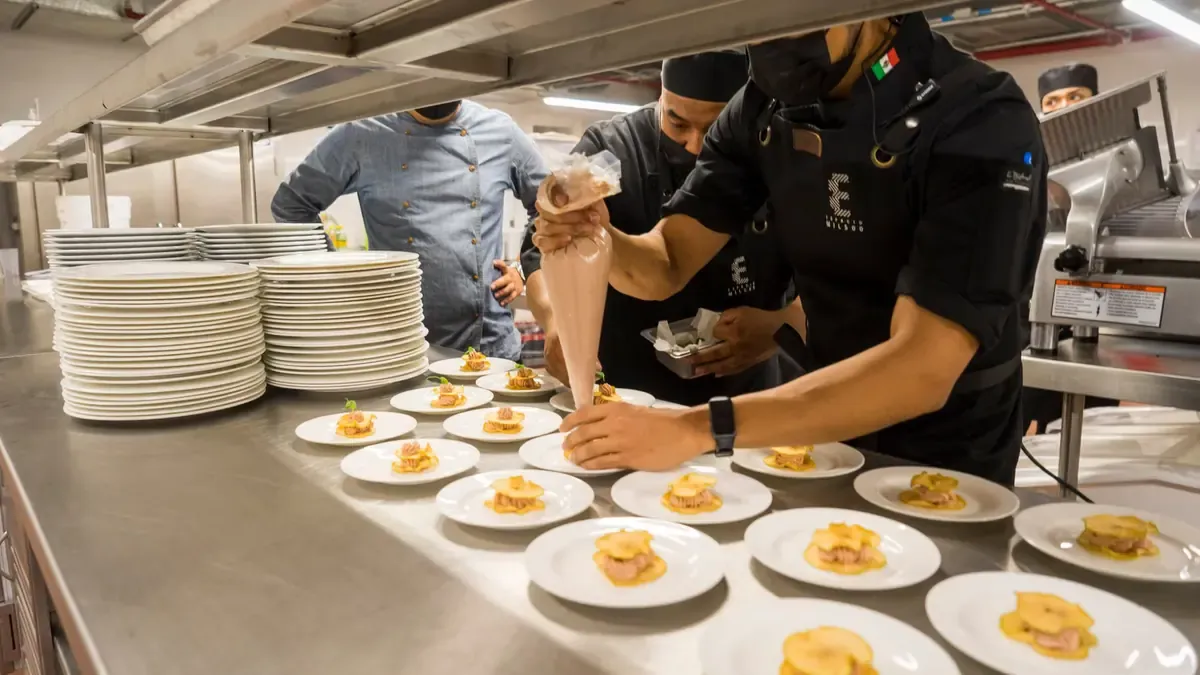
Events and chef’s dinners: the dates that otherwise get lost
Bankets are booked in advance; events sell on emotion and speed. A chef’s dinner on Friday, a jazz evening, a harvest menu: this is how you reach the guests who are not planning a wedding, and the people who came for the dinner return for a birthday a year later.
An events page on the site solves three things the announcement post on social media does not:
- The list survives the feed. Posts fall below other content; the page keeps the whole season.
- Booking is immediate. A button from the event card into the form, with the date and headcount already filled in.
- The archive works. Someone who missed the last dinner looks at what you usually run and decides to come next time.
If events run more than once a month, the same page needs seat availability: how many places are left, and whether there is a waitlist. An event schedule in DMs is how two people get sold the same seat.
Season: New Year dates and weddings
Two seasons decide the restaurant’s year, and both fail the same way: enquiries come faster than the hall can answer them.
New Year. Dates book out in November, guests ask about a minimum months ahead, and the manager ends up answering the same five questions twenty times a day. A page for holiday banquets, a minimum per person, an enquiry form, held dates on the calendar: all of it should be live before the season opens, not in December when the phone is already busy.
Weddings. Here the cycle is longer: venues get chosen in winter for the summer, guests compare four restaurants, and the decision goes to whoever answers with details first. What helps: photo sections of the zones, capacity in both formats, a sample plan for the evening, a table of services, and one line about whether a ceremony and the first dance are possible on the territory.
Both seasons are why the enquiry log matters: in November you see which evening was asked about most, and the kitchen sets the plan for that date before the calendar fills up.
Google Maps, QR codes and the phone at rush hour
Banquet enquiries come from the hall too. A guest eats dinner, likes it, and asks the waiter: “do you do bankets here?” What happens next depends on where the answer leads.
- A QR code on the table card. Straight onto the banquet page, not the homepage: a guest scanning a code wants a number and a capacity, not a brand story.
- The phone at rush hour. When the hall is full nobody picks up, and the evening’s enquiries go to the restaurant down the street. A form on the page removes the wait for an answer entirely.
- A Google Business Profile. Guests search “banket Lviv”, the profile opens, and if it carries no banquet menu, prices or photos, they call without knowing what to expect. That is what the profile posts and photos are for: a separate note per season.
One more line about the phone. If the host answers it while serving, part of the enquiries simply stop calling. A separate number for events, or a line in the form, gives the restaurant its evenings back.
Where this does not save money
An enquiry form with no automatic reply. The guest does not know whether the message arrived and rings elsewhere.
Held dates without a deposit. The evening “belongs” to two people at once, and the first to pay takes it.
A page with no prices. The kitchen loses calls that only filter out people with different budgets.
A photo section shot once, two years ago. Guests arrive expecting the hall from the pictures and get a different one.
The host and the manager keeping their own calendars. Double bookings come from two owners, not weak software.
One page for all zones. A hall for thirty and a terrace for sixty are two offers with two numbers.
An event schedule nobody maintains: one date already passed, another still shows as open.
Case: a restaurant in central Lviv
The restaurant with a menu on the site had the menu on paper, a phone and Instagram; the host ran bookings by phone, and guests found the opening hours on Google. Three groups of problems: guests could not see the range or the per-person banquet price before calling, regulars had no way to order in advance, and the season’s enquiries had no single place.
We built a Corporate-Lite site: sections with the interior and the terrace, a full menu with banquet terms, dish photos and an online version of the paper card. Four weeks, three rounds of copy sign-off. The next stage agreed with the owner: online ordering, an events page, and a banquet page with a form and held dates on the calendar.
What the case states as fact: the menu, the zones and the event page are now on the site, and the host has fewer repeated calls. The conversion into bookings is a task for the season, not a result promised in the contract.
What it costs and how long it takes
| Scope | What it does | Guide |
|---|---|---|
| Banquet landing | capacity, formats, minimum, photo sections, enquiry form | from $699 (₴29,000), 2–3 weeks |
| Restaurant site with a menu | menu, zones, events, contacts, opening hours | from $1,325 (₴55,000) |
| Support and edits | menus, prices, seasonal banners during the term | from $72 (₴3,000)/mo a month |
| Event schedule and calendar | held dates visible to guests and to the manager | a line item at quotation |
| Service | From | Timeline |
|---|---|---|
| Corporate site · Lite (up to 7 pages, custom layout) | from $1,325 (₴55,000) | 3–4 weeks |
| Landing · Lite (a layout built for the offer) | from $699 (₴29,000) | 2–3 weeks |
| Support · Lite | from $72 (₴3,000)/mo | monthly |
How we do this at DEXA
- Corporate site · Lite (up to 7 pages, custom layout) — from $1,325 (₴55,000) · 3–4 weeks (About this service)
We start with the data the hall already has: capacity, minimum, deposit, menu, the five usual guest questions. A banquet landing with a form, or a full site with menus and photo sections. Prices and deadlines fixed in the contract, copy approved in rounds.
Questions restaurateurs ask
Does a banquet need a deposit?
Yes, and the term has to be written out in the reply before the date is held: amount, deadline, what happens if the headcount falls, what happens if the guest cancels. A date without a deposit belongs to nobody, and the hall loses a season’s worth of enquiries in the meantime.
Where should enquiries go if the site already exists?
Into one entry point: the banquet page with a form, and Instagram pointed at it. The host answers with the same data the guest could have read, and at the end of the month you have a table of enquiries and reasons instead of impressions.
How not to double-book the banquet hall?
One calendar per zone with a hold status by date, and one person who owns the schedule. Dates already held must be visible on the page, not only to the manager.
Do photos and the events page help?
Both help, in different ways. Photos get you past the first filter: will thirty people fit in this room. The event page brings in guests who are not planning a date and come for the format.
How long to make such a page?
From 2–3 weeks for a banquet landing to 3–4 weeks for a site with a full menu and photo sections. The first enquiries start arriving on day one of the landing; a full site is timed to the season, so a menu that changes twice is a normal situation.
The guest says “I’ll think about it” and holds the date. What now?
Agree the terms in writing: a date is held for a few days with a reply or a deposit, then it releases by itself. The guest learns the schedule, and the hall stops selling an evening that no longer exists.
We have three zones and different capacities. One page or three?
One page per zone, on one site. A guest looking at the hall for sixty and a note that it is a hall for thirty either calls with a question or leaves, and in both cases you lose the enquiry.
For the banquet page itself with its capacity, formats, minimums and a date calendar, see the restaurant page. What booking should look like in other niches, with the difference between a bot and a full CRM, is shown on different data in the online booking and prepayment guide, and the car workshop CRM case has the full client-history side of it. Work out the budget before the call in the brief builder; the process, including copy review and block sign-off, is written into the contract.
landing · Lite from $699 (₴29,000) · landing · Standard from $1,084 (₴45,000) · landing · Premium from $1,566 (₴65,000)
Need the same solution for your business?
One page whose job is to sell: a structure around a specific service or product, a custom layout, motion, enquiry forms and analytics. Built for traffic from Google and Instagram ads, so every click has somewhere to land.
- A structure built to sell: blocks that close objections
- A custom layout, the motion and the technical plumbing
- Leads into Telegram, email or CRM, with a GA4 event
Get a free website audit in 48 hours
Speed, SEO, conversion — a 12-page report with a prioritized fix plan. No obligation, no spam: we show what to improve even if you never hire us.

